Fugee Abi Morgan
Context/ research
Refugee facts
What is a refugee
A refugee is someone seeking protection from a safe country,
other than the country from which their lives are in danger for reasons such as
race religion, nationality, membership of a social group, or political opinion
is outside of their nationality and is unwilling to avail themselves of the
protection of that country.
An Asylum seeker is someone is someone that has now arrived
in a country asking/seeking for asylum. They are called asylum seekers as they
have not yet received a decision on whether they are a refugee or not. However,
even though they are not labelled a refugee they do not have the same rights
and privileges as a British citizen does, like being able to work etc. Everyone
has a right to seek asylum as this process is 100% legal as well as being
refused asylum is still legal because it is not a crime for people not being
able to prove they need protection as a refugee as the criteria is extremely
strict.
The most common reason for people seeking asylum is that
they are in danger of countries dominated by war where basic human rights are
completely abused. Henceforth, the largest number of asylum applications to the
uk in 2015 came from Nations of Iran, Syria, Sudan and Eritrea.
The number of refugees in the UK is limited as according to
the UNHCR, by mid-2015 there were 117,234 refugees, 37,829 pending asylum cases
and 16 stateless persons in the UK. These statistics prove that refugees barely
meet up to one quarter of the UK population.
https://www.refugee-action.org.uk/about/facts-about-refugees/
Looking at this research made me realize how privileged I am
to have been born and stay in this country as there are people that have had to
flee from war driven countries who are literally just about surviving to stay
alive and are desperate to come to the UK and gain basic rights of going to
school/being able to work. I thought about this when I was playing my role as
Ara in scene 32 when she got the news to tell Kojo that she goes to school now,
I tried to embody just how ecstatic she must feel whilst all the while
sympathizing for Kojo who is not allowed to stay in the country, let alone go
to school- this represented in real life how many other children must feel so
distraught and disappointed when they realize they can’t stay in the UK
child refugee stories
Melody is a young girl from Nigeria who was sent to live in
the UK at the age of twelve after she had just recently lost her parents. When
she was in the UK she lived with a family friend who abused the role of caring
after her unfortunately and ended up slaving her around to do cleaning around
the house, she was also repeatedly raped by different men coming In and out of
the house. If she ever dared to open her mouth in disagreement she was severely
beaten. She then eventually was thrown
out of her house because she put her foot down and refused to sleep with one of
the men. This resulted in her being homeless for almost a year where she had to
physically beg for food. Unfortunately, during her time being homeless she was
raped again and tried to look for help in agency, but it was hopeless. In due time Melody finally received the help
she deserved from a Refugee council that helped her get the status that she
needed and is now living a much happier and successful life.
Matiullah is a 15-year-old boy who previously lived in Afghanistan with his family. His uncle became a member of the Taliban’s and suggested for his father to join too. When his father refused, Matiullah’s whole family had disappeared forcing to him to travel to the UK in a lorry- this process took two months. He was not able to eat or drink anything and there was barely any air. When he finally reached his destination of the UK he managed to apply for asylum and stay with one of his family members for nearly 3 years. As time went on he managed to receive help from a refugee council that helped him to learn English and successfully got him into a college where he also played cricket helping the community. Matiullah is extremely successful now and has recently been presented with an award by David Beckham and Muhammad Ali for helping others.
Faisal was another young 15-year-old boy from Afghanistan who had to flee from his country, this was because his family got murdered by the Taliban’s. When he arrived in the UK in a lorry he was questioned about himself and how he got here. He was age disputed and they put him in a adult detention Centre, sorting out to deport him back to Afghanistan and he says the way he felt treated there was inhumane. Faisal had to stay at the detention centre for 53 days until the refugee council helped him to live a better life.
From learning and reading these experiences I can see why
Abi Morgan was inspired to do a play on this topic as it is extremely important
to gain awareness to it. As so many of us that are privileged are completely
ignorant and naïve with our knowledge about refugees/asylum seeks and their
lifestyle. With this knowledge it helps me to dig deeper into my character
(Ara) and try my best to embodies the different emotions she felt.

Refugee camps
A refugee camp is a place for a refugee who is likely to
remain a refugee for a few years will have to stay. A lot of refugees are
displaced for nearly 2 decades ‘It is life in limbo’. People from different
nations seek asylum in refugee camps. Approximately 28,300 people have no
choice but to leave their countries due to a crisis. Refugee camps can provide
people with not only safety but with basic valuables, such as food and water
that they previously were not in possession of helps better their lives.
Here are some facts about refugee camps
-2.6 million refugees live in refugee camps
- Over 50% of people who seek asylum are children
-Even though more than half of refugees are children, these
camp lack schools, which is detrimental to these children’s futures as they
usually stay there for a few years.
-Due to their not being enough food in the camps, a lot of
refugees suffer from chronic malnutrition.
-Afghanistan, South Sudan and Syria cover 55% of the
populat6ion in refugee camps.
Learning about refugee camps helped me to identify with how
safe Ara must feel and comforting she must feel to be under shelter with the
other children.
About Abi Morgan
Abi Morgan is a Welsh Playwright and screen writer, she was
born in 1968, since then her best-known works are from television featuring her
film such as, The Iron Lady, Shame and Suffragette, Brick lane and television
work such as Sex Traffic and The Hour.
Morgan has always had the spirit of theatre in her from the
day she was born as her Mother is actress Pat England and her dad the theatre
director Gareth Morgan. She grew up in Wales however she spent the most of her
childhood moving around and changing schools numerous amount of times. This was
due to her parents being divorced, so she had to follow her mother around
pursuing her acting career, starring in various productions. She also has a
sister who is a fundraiser at London’s Unicorn theatre.
Watching her mother’s life as an actress, initially inspired
Morgan to become one herself, however that dream soon faded as she then went on
to study drama and literature at Exeter University. Following that, she did a
postgraduate writing course at the central school of speech and drama.
Writing career in theatre
Morgan has written plays for various theatres, including the
Royal Exchange Studio Theatre Manchester, the Royal Lyceum Theatre, The travers
Theatre, Edinburgh. Her first ever professional stage credit was in 1998 with
Skinned at the Nuffield Theatre, Southampton, and then on her success has been
immaculate as in 2002 her 2001 play Tender for the Hampstead Theatre gained her
a nomination as “most promising writer” at the Laurence Olivier Theatre Awards.
Some might say all her success is ironic as it is known she did not show anyone
her writing for 5 years.
Televison
Morgan gained her first television credit in 1998 on the ITV
drama series Peak Practice, after that with a television play. My Fragile Heart
and BBC2 drama Murder. Following her success, she was commissioned to write the
single drama Sex Traffic for Channel for in 2004 which went on to win the 2005
BAFTA award for best drama Serial. Since that she has written several single
dramas for television including, Royal Wedding in 2010 and Tsunami: The
Aftermath etc.
Film
Morgan has also been successful in her film writing as well she
has won two BAFTA awards for her work on The Iron Lady and on Shame. However,
she has also received some controversy during her career of writing for cinema
as her adaptation of Monica Ali’s novel Brick Lane as some Brick Lane Bengalis
labelled the film defamatory and a planned royal fil performance was cancelled.
Here is a list of all the Plays, film screen plays, and Tv
Screen plays she worked on/worked with others on;
Plays
Skinned (1997)
Sleeping Around (1998)
Fast Food (1999)
Splendour (2000)
Tiny Dynamite (2001)
Tender (2001)
Monster Mum (2005)
Fugee (2008)
Chain Play – Production II
The Night is Darkest Before the Dawn (2009), as part of The
Great Game: Afghanistan
Lovesong (2011)
27 (2011)
The Mistress Contract (2014)[
Film screenplays
Brick Lane (2007)
The Iron Lady (2011)
Shame (2011)
The Invisible Woman (2013)
Suffragette (2015)
TV screenplays
My Fragile Heart (2000)
Murder (2002)
Sex Traffic (2004)
Tsunami: The Aftermath (2006)
White Girl, part of White (2008)
Royal Wedding (2010)
The Hour (2011)
Birdsong (2012)
River (2015)
The Split (2018)
Context on Afghanistan war/ effects on children in families & child refugees (in relation to my character Ara
In relation to my character, I found it my Job to research
context about the country she traveled from as they are one of the most
populated nations that fill refugee camps. I was intrigued to know how
realistic the situation of her coming to this country in a Lorry was, how she
now has no family and how many others had similar stories to that. I wanted to
find out if these were the measures young children had to take when fleeing
from Afghanistan because the war was so bad and how people being murdered took
a tole on families etc. I did this research in hope of being able to embody my
character more.
“Afghanistan today is without a doubt the most dangerous
place to be born,” Daniel Toole, regional director of the UN Children’s Fund
(UNICEF).
The war in Afghanistan is the world’s longest running major
armed conflict. Currently the war remains between the Afghan Security Forces
and the Taliban. This war affects the lives of over 6 million people as 10600
have had to be displaced in 27 provinces since the beginning of the year- half
of these are children. This war affects children so much that a quarter of
civilian casualties are children. Hundreds of child casualties are reported
dead or injured monthly due to armed groups and being attributed to
international forces (majority being murdered by airstrikes).
Many children are also being forced to recruited by armed
groups such as the Taliban etc. Mostly boys than girls. Children are being incarcerated
for any sort of association with armed groups by the Afghan government. There are
worries that children are being held in adult prisons without due process and
are frequently subjected to solitary confinement. A lot of the children have no
legal assistance or legal documentation, and some have reported threats and
torture during interrogation.
40% of children in Afghanistan still have no access of
schooling at all and some of the schools are even without buildings. This is
due to not only buildings that are now ruins due to the impact the war had, but
also there are not many qualified teachers.
Interview on being an afghan child refugee
A report from cbs new about children fleeing war
Here is also a report from CBS news in 2013 about how 1000’s
of child refugee’s try and make it to Europe.
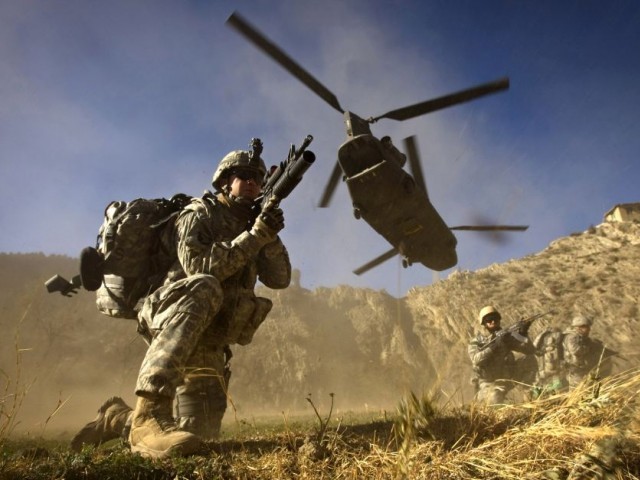
Child soldiers
Child soldiers are children ranging from the age of 4 up to
18 who are recruited for military purposes. This works both ways with the
Genders. As military purposes can rage from a whole load of things, these
children are not only used for just violence, some are used for domestic things
like cooking and cleaning and others can be spies or messengers. Some children
get recruited just to be sexually abused. Since children are relatively young
and naive, forcing them into different areas of service makes the job for
military organizations much easier than having to deal with adults.
Unfortunately, some children are so poverty stricken they have no choice but to
join military organizations and endure the hard labor that they are getting
themselves into. Some children also join to be safe as they may have lost all
their family and have no one around them.

Skills in practical work
Understanding a character
When taking on a role, it is extremely important to
understand your character. Understanding your character can be through
different things like how their personality has a reflection on their body
language/mannerisms or how their age will result in how immature/mature their
mindset is. The analyzation of a character can change a whole performance. When
I wanted to first understand my character I looked through all the scenes that
she was in and highlighted all her lines. I first gathered that my character
has a very outgoing, bubbly personality which I took a liking. I also noticed
that she seemed to play tough on the outside(whenever her family was bought up
she swiftly changed topics) but in the inside she was very caring and loving. I
saw that she only showed the soft side to Kojo. I did some outside research
about Afghanistan wars/ children losing their families and gathered that Ara
has probably through a lot which has caused her to build thick skin and create
this confident persona, however she is so light hearted with Kojo as she refers
to him as her ‘family’ and she has lost all her family so he probably gives her
a sense of comfort, feeling like she is at him; that’s why she ‘loves’ him.
Articulation
As actors our articulation is vital as it is important to
hear our voices as clear and distinct as possible. We always do warm ups in
class and before every performance for our articulation. Throughout the year we
have done many tongue twisters, such as ‘she sells sea shells on the sea shore’.
At the beginning of the year, I wasn’t sure they were making an impact to my
voice but as the year went by I can see the difference between my performances
at the start of the year till now during my fugee performance as I pronounce
all my words correctly and I don’t rush through my lines, I effectively take
time and really feel what I’m saying. I also feel this improvement of my
articulation will help the audience o focus on me as a character throughout the
play.
Vocal projection
Much like articulation, vocal projection is involved into speech, so it is extremely important. It is crucial that our voices are strong, loud and clear whilst we are performing. This is because it can have a reflection on the characters mood, emotion etc. The main reason why vocal projection is so important is because absolutely everyone in the audience needs to hear you perfectly clear. My character as Ara is very confident so I always make sure I have good vocal projection when saying my lines, however I am in a lot of scenes with Kojo who is my love interest in the play so the scenes are quite intimate and during rehearsals my teacher gave me feedback that I need to be more loud even though I’m in an intimate scene, so will work on that towards the final performance so I can project project my voice as loud and clear as possible.
Stage Awareness
Stage awareness is another important skill to have, it
proves that actors are knowledgeable and aware of the space around them
especially in relation to other actors and props. Our current production has a
big ensemble which requires attentive always within the space around- we must
be vigilant when moving around to not bump into any other actors on stage or
potentially injure ourselves by knocking into any of the many props around us.
When we perform and during rehearsals I make sure that I am aware of all my
surroundings. If I am ever in a cramped space I make sure to move into a space
where there is a lot of free room around me, otherwise I could potentially bump
into other actors or props unknowingly just because it is more difficult to be
aware when caught up in a tight space.
Physical Theatre
Physical theatre is a form of theatre which emphasizes the
use of physical movement, as in dance and mime, for expression. Physical
requires actors to be use their creative skills to bring the ensemble together.
We use physical theatre a couple of times in our production of Fugee, one
example of this is when we create the soldiers truck by getting in a huddle,
like soldiers would be and moving side to side uncomfortably to illustrate how
the conditions are in a truck for real soldiers. Another example is when we do
the park scene and everyone positions their arms to be in a branch form and
some people stand on chars to create levels and resemble the reality of how all
trees grow differently.
Stage Presence
Stage presence is important as an actor because this is what
will cause the audience to be enticed to you and focus on you throughout a
performance. An induvial actor’s charisma or charm can draw full attention from
an audience. When playing Ara I wanted to make sure I portray her bubbly
personality in order for the audience to connect with me, I aim to exude
positivity with my body language and my facial expression illustrated my
enthusiasm and confidence. To have good stage presence is what creates a
memorable character.
Stanisvlaski system
Stanislavski's "Magic If" describes an ability to imagine oneself in a set of fictional circumstances and to envision the consequences of finding oneself facing that situation in terms of action. I thought about Magic If when playing Ara in certain scenes. I imagined the scene with me and the other kids in the refuge listening to the manager tell Kojo he must leave the refuge. I thought the emotions it would provoke if I felt someone I loved I loved was being treated unfairly and forced to leave me unnoticed. I would feel emotions of distraught, disappointment and anger towards the person delivering this awful news. Therefore, when saying my lines in this scene I tried my hardest to project my rage towards the manager telling us Kojo must leave. Doing this makes the scene much more realistic as I put myself in the body of the character and determine how I would act in a real-life situation.
Given Circumstances are the information about the character
that you start off with and the play, whether it be environmental and
situational conditions that influence the actions of a character. Two of the
given circumstances for Ara is she is that she is a fugee from Kabul,
Afghanistan and she has no family. This is someone that Ara cannot change, and
these circumstances may cause her to feel lonely and attach her self to anyone
she forms a bond with. This is the reason why Ara feels she ‘loves’ Kojo and
that Kojo is her ‘family’ as they’ve formed a tight bond. So as actor I aim to
show this bond in the play by creating intimacy in scenes with just kojo and
Ara e.g. with my body language, making sure Ara finds ways to touch Kojo
whether it be her teasing or being affectionate etc. Given circumstances has
taught me I cab push my acting to be more affective by making an example of how
different environment/situations can affect my character.
Objective
An objective is the reason for our actions, what we want to
achieve during the play. An objective is
what the character’s goal is, what they want to achieve by saying certain
things. For example, when my character as Ara introduces herself, she tells the
audience one or two facts and makes it clear that she knows a lot of facts. Her
aim is to introduce her character as smart, strong and witty from the start
which gives the audience insight to my character and her personality for the
rest of the play.
Method of Physical Action
Stanislavski developed the "method of physical
actions," to solve the dilemma of spontaneous emotion in a created
environment. This means that an actor may perform a series of physical activities
to help illustrate the emotion they are trying to portray through the
character. In scene 6 when I find out Kojo stabbed a man I try to implement
elements of physical acting by acting so distressed and distraught, putting my
hands on my face and running out of the scene, to show I am so disappoint and devastated
with Kojo. This method helped me to develop my character more as I’m using body
language to help provoke emotions out of me.
Technical Theatre
Hair and make up
 I gave the role of being in charge for hair and makeup
because that is one of my other passions aside from acting. I also
professionally work in beauty outside of this course and I thought It would be
very helpful to put my expertise to play to help our performance look even
better. I was assigned this role pairing with another girl in my class and we
decided that since there are a lot of scenes we will simply not have time to do
absolutely everyone’s makeup, just main characters. So we decided all the young
girls should have natural makeup and the mother should have a slight touch of
glam.
I gave the role of being in charge for hair and makeup
because that is one of my other passions aside from acting. I also
professionally work in beauty outside of this course and I thought It would be
very helpful to put my expertise to play to help our performance look even
better. I was assigned this role pairing with another girl in my class and we
decided that since there are a lot of scenes we will simply not have time to do
absolutely everyone’s makeup, just main characters. So we decided all the young
girls should have natural makeup and the mother should have a slight touch of
glam.
Roza and Ara both had their hair tied back in a bun we very
little makeup and the mother made her back also with slightly heavier makeup. Due
to our performance being so busy I was not able to get pictures of how this
looked but they looked amazing for the production.
Costume
For my performance as Ara I wore actors black with leggings
and trainers and a casual slouched top, to illustrate how a young girl dresses.
The mother wore a long floral dress, which illustrates the calming soothing
personality she has. The child soldiers dressed in realistic army jackets and
hats. Kojo changed throughout the play, when he stabbed the man he wore a black
hoodie, symbolizing the dark dangerous act he did and when he was just a
refugee he wore a dashiki represent his African culture an also old worn-down
shoes, showing that he didn’t come to the UK with much.
Sound
We had different sound music for different scenes to help
illustrate different times in the play, for example, when Kojo was at home we
played African music and when we are all on the train we had an announcement voice
to represent how we were on a train, making it extremely realistic.
Lighting
We had spotlights on induvial in scenes to represent the
importance of it. For example, at the end when all the main characters said
facts everyone had a different spotlight to emphasis the importance of what
they were saying. Also, when Kojo was back in the ivory coast there were red lights
to show how hot and dangerous the environment there is.
For props we had crates, a baby, a bottle, a buggy, a
football, a radio, guns, a clipboard, a knife, a towel, a bowl ketchup and
beans, and a suitcase.
The first week was our performance and rehearsal of our individual Shakespeare monologues.
The First week reading the play Fugee (Week 2)
We read through the whole script as a group and talked about what we thought of the play. We all notice how different the style of the play was compared to others we had done previously, such as Shakespeare and Chekov. This pay took more of a contemporary style. When you first have a look at the play it opens with the end scene and major events in the play appear as flashbacks in random areas of the play which is difficult to understand when first reading. Nevertheless, we as a group read through the play and talked about the events that we didn't quite understand and manage to put them in chronological order. We gathered that the play was about following the journey of a 14 year old 'Kojo' from ivory coast as he embarks on his difficult journey of seeking asylum in the UK. The opening scene is the event of kojo stabbing a man to death, another flashback scenes include kojo's family getting killed by child soldiers on his eleventh birthday. Kojo then becomes a child soldier and manages to stay in the UK at 14, however he is age disputed and doesn't get successful stay in the UK.
The following day we recapped about everything we could remember from the play and were asked to create a 10-15 minute improvisation based on that. My group wrote down every single characters names, other groups wrote down different events of the play etc. For the improvisation we thought about all the important events of the play and how we interpreted them.
after reading through the script in class, getting a feel of the different characters, we all started to imagine what role we wanted to play. At this point we figured out the amount of roles were in the play were too many for the amount of people that we had in our class so we knew we had to double/multi role. I straight away took a liking to the role of Ara as she was the love interest of the main role Kojo. I also like her role because i found that some aspects her reminded me of my own personalty; in the play she is very confident, witty bubbly, cheeky etc. So i thought it would be interesting and fun playing her. The second character i thought of was the social worker as back up because i found it interesting him age disputing Kojo and it made me want more intrigued to find out about the topic of age disputing and different ways asylum seekers are discriminated against.
Through reading about the different events in the play we then explored the different themes of the play which we decided were topics like desperation, refugees, communication, acceptance, family, rejection,duties and the impact that the past, present and future all have on one another. Here below is a picture of where we noted them all down as a group.

Week 3
As a group we all read through the script and started to put all our work and started to put different scenes to practice reading an for and playing different characters, and how everybody interpreted them differently. We read in for characters that we thought of playing when we do the actual production and also characters that we maybe did not have interest in as the play has various characters in it and not everybody in the class would be able to fill these roles. Many of us will probably have to play more than one character in our actual production to help make the ensemble look great. I offered to play of the young girls in the urban street scene.
We then had to audition for roles we wanted in the play, we had to devise a short scene that is not already in the script but still including our desired actors. This was to show my teacher that we understood more in depth about characters personalities etc. For our scene we had Ara, a manager, a social worker and Cheung. Since many of us in the group had in mind two roles that we wouldn't mind playing, we devised two short scenes and made it into one by switching characters. For the first scene i played the translator as Chueng was being introduced into the refuge with his social worker and and the manager explaining everything he needs to know about the refuge, including other kids there, how long he will stay they're etc. As a social worker i asked questions about his health, how he got to the uk etc. Then they finally decided he can stay and that's when we transitioned into the other scene, the manger showed Cheung around the place and showed him where he will be sleeping and introduced him to Ara as they will be sharing a bunk bed. Ara and him then have a small exchange as Ara is being super friendly/ welcoming and informative about the refuge, then it was time for them to sleep. Our scene showed our knowledge of each character that we were playing, for me i portrayed Ara as the confident, bubbly girl she is and also the strict social worker that has no problem being inquisitive. It also showed our knowledge how refugee camps are and the process of getting there.
In the process of auditioning we thought about double casting as many people wanted similar roles, for example 4 people wanted to play Cheung, 2 actors wanted to play Roza, 2 actors wanted to play Ara etc. This was a good idea as it means more people get the opportunity of playing a big character. I share the Role of Ara meaning I will play her one day and another student will play her the following day. I also have a role of a young girl in the urban street.

We then had to audition for roles we wanted in the play, we had to devise a short scene that is not already in the script but still including our desired actors. This was to show my teacher that we understood more in depth about characters personalities etc. For our scene we had Ara, a manager, a social worker and Cheung. Since many of us in the group had in mind two roles that we wouldn't mind playing, we devised two short scenes and made it into one by switching characters. For the first scene i played the translator as Chueng was being introduced into the refuge with his social worker and and the manager explaining everything he needs to know about the refuge, including other kids there, how long he will stay they're etc. As a social worker i asked questions about his health, how he got to the uk etc. Then they finally decided he can stay and that's when we transitioned into the other scene, the manger showed Cheung around the place and showed him where he will be sleeping and introduced him to Ara as they will be sharing a bunk bed. Ara and him then have a small exchange as Ara is being super friendly/ welcoming and informative about the refuge, then it was time for them to sleep. Our scene showed our knowledge of each character that we were playing, for me i portrayed Ara as the confident, bubbly girl she is and also the strict social worker that has no problem being inquisitive. It also showed our knowledge how refugee camps are and the process of getting there.
In the process of auditioning we thought about double casting as many people wanted similar roles, for example 4 people wanted to play Cheung, 2 actors wanted to play Roza, 2 actors wanted to play Ara etc. This was a good idea as it means more people get the opportunity of playing a big character. I share the Role of Ara meaning I will play her one day and another student will play her the following day. I also have a role of a young girl in the urban street.
Week 4
This is the week we started to doing read troughs with the group as a whole and started practicing some scenes. We started with ensemble scenes like the street scenes as they will require more work as there are more people on stage and it will require excellent stage awareness skills from everyone as people have more of an opportunity to block others. It's also important we practice this scene in particular, as this scene recurs 6 times throughout the play, so they need to look as identical as possible. Smaller roles like Girl 1 and Girl 2 and Girl with buggy had not been casted yet which made rehearsals quite challenging as nearly every time people had to fill in for roles each lesson and were unsure of what they were doing. This means we couldn't go swiftly with progressing further.
We focused on blocking this week as we looked at it through other scenes in order of the play. We were making progression with our work on blocking, however, we were still quite new to the script meaning we were unsure of the scene order causing rehearsal time to go slow.
As we carried on rehearsing, we started noticing potential issues when it came to transitions. For example, Molly who plays a dying man at the end of scene 14 has to quickly jump up from laying dead on the floor and quickly transition into being a mother. We thought about potential issues with how speedily she'd be able to go back stage, change costumes and the come back on stage, my teachers suggested that since i'm not in any of those transition scenes it would be a good idea for me to help Molly at the back change into her costume as the mother as quick as possible.
Week 5
Week 5 is when we casted on the smaller roles such as Girl 1 Girl 2, Passport Controller and Market trader. In comparison to older rehearsals when these roles were not yet casted and caused us to constantly pause every few minutes. Rehearsals now ran way more swift as people were discovering their lines and blocking.
We then started thinking about extra things that make a performance like props costumes and sound. Therefore, we separated into groups to go into the script and decipher all of the different props, costumes and technical changes we will need for the performance. Each separate group focused on one separate element and decided wrote them down on pieces of paper to hang on our rehearsal rooms, however the group that noted down all the technical effects we would need handed it to the Technical Theatre Students as they will be helping us for our show.
We the discussed as group what we think different characters should wear. Collectively we all agreed that the child soldiers should all wear army inspired clothing, the kids should have simple t shirts as they are refugees so they don't have much and the mother should wear a long modest dress as she is older. For my character as Ara we decided that i should where a plain purple t shirt and a headscarf (that is optional).
Week 6
Due to there being so many different scenes (and repetitive ones), short scenes at that- we anticipated that we might get confused backstage performing of when our cues are and might be a slow when it comes to transitioning. We wrote up on a large piece of paper all the different scenes, a title bases on what happens in the scene and all the different characters in the scene.
At this stage stage we were on with doing full run through as our performance was near. In each run though because their was a double casting different people would take turns to do a run though with the characters they are playing. For example, in the morning i would do a run through playing Ara, then in the following after Jayschelle would do a run through playing Ara. We also timed it for the first time, which was at 1 hour and 20 minutes. Our teachers told us to do a speed run through to see if we could make our transitions smoother. This method seemed to work as when we did another run through it was timed at 1 hour and 5 minutes.
We also did another run through in the theatre as it is a different space we wanted to know any potential blocking that we would have to face. We did whole run though slowly and sorting out sound and lighting with the Technical theatre students so they could get used to their cues. During the rehearsal we decided to place 5 chairs towards the back of the stage so we could grab then when we need. We also put tape on the floor so we remembered where they are positioned as we use them for a scene, then place them back. We also decided to put rails behind the curtains for swift costume changes.
Week 7
This week is the week of our performance so by now we had finished our tech rehearsals and we now bought in our costumes that we will wear for our performances, since I only play one major character it wasn't required for me to have any costume changes so my main focus was on transitions and making sure i was on time for all my cues.
We did dress rehearsal in the morning on both days before the show for the character we were playing on that day. I also made it my duty to help anyone that needed to have swift costume changes, so they could make it to their transitions on time. For example, in scene 14 i helepd the dying man change into the dress for the mother so she could make it back on stage in time.
Evaluation
Our performance of Fugee was performed two days on the 30th
and 31st of May and I think both days went equally as fantastic as
the other. Everyone was on time for their different cues, all transitions
concerning people changing characters for their multi roles and moving props
for different scenes went smoothly. Everyone remembered their lines and had
great articulation/voice projection. Everyone was in sync with each other as we
were all aware of the space that we were in; we stayed connected from
throughout. Our energy levels stayed the
same from the start of the performance all to the very end. We were all confident
and our hard work from rehearsals paid off as it showed. Whilst playing Ara I
had to make sure that even though I wasn’t in every scene my energy levels were
still high because in between the times where I was not on stage, if I
completely let loose of my character it would be hard to regain my energy when
I came back on stage. Also, in the scenes that I was in I made sure that I
stayed in character all times even when I wasn’t speaking for example, the
scene where Cheung and Ara witness Kojo stab the man, Cheung has to say a
monologue and me and Kojo have to freeze, it would be easy for me to lose focus
and drift out of character while Cheung is saying his monologue as it is quite
long, however I chose I powerful still image to freeze in and throughout the
time was completely thinking of my next move/line so I was always in character.
Also, when I had long speeches in my line I always made sure that I added
character to it. For example, when Ara first comes on introducing herself, I
made sure I engaged with the audience, so they felt like I was talking to them,
especially in my line ‘Did you know Afghanistan is the only nation whose name
begins with an a but doesn’t end with an a … Africa, Asia ... see …see? With
lines like this it is important to involve the audience otherwise they may feel
you’re reading a long lecture from a script. As a whole group, everyone kept
their energy at a high, especially during the street scene where before the man
got stabbed everyone was acting casual in slow, mellow movements, then when
Kojo stabbed the man everyone started moving around frantically, shouting and
screaming all over one another, causing this scene and our emotions to look
extremely realistic. This shows as an ensemble we collectively possess good
skills of variation in our speed and tones and excellent voice projection. What
was also realistic was the relationship/ connections between the different
characters, such as Kojo and his mother, when Kojo’s mother came to sing songs
to him before he went to bed demonstrated the nurturing and close relationship
they shared.
When learning lines, Ara’s personality seemed quite cheeky
to me and it was evident that she has been through a lot which has now cause
her to build a tough exterior and be very bold. Which is why I chose to portray
her as a very confident character. In scenes where she tells Kojo they are
going to see trees or going to get something to eat I made sure it was clear
that she knew she was sure of what she’s doing, and she knows how to take the
lead in certain situations since she has been indecent for a while now. I also think our physical theatre was
effective as ensemble through examples of when we created the train scene, we
came in a close space witch different levels of some people crouching and some
people standing to represent how some people sit down on a train whilst the
rest stand and swaying fom left to right to resemble how rough the carriages on
a train move.
Overall I think our performance was great as whole, but the
there’s also room for improvement and I think what could of made our
performance an even greater one is if we focus more on stage awareness as in
the street scene where everybody is in that scene it can become quite difficult
to find your own space and not end up cramped next to one another, which is
what I noticed, a lot of people blocked others due to unawareness. I also
noticed that many of us forgot to go more downstage when performing which
defeats the purpose of tech rehearsals where we planned where certain lights
would be at time to highlight a character. This is what we can remember for
next time to make a better performance.
If I was to perform fugee again, the things I would like to
have different are to use more props when it came to scenes like the park
scene, bring actual props of trees and a picture onto the back wall of
different backgrounds a park would have such as swings grass etc. This would
help the scene to look more realistic and help the audience to imagine they are
in that setting. I would also include background sounds of children, talking
and playing when Kojo first visits there as it could help us understand what
kojo is hearing and feeling as he enters a new environment, perhaps feelings of
overwhelmness.
In relation to my proposal, my research about child
refugees, child soldiers, refugee camps and war in third world countries all
came in to play with our production. I hoped that are play brought the audience
knowledge to asylum seekers and child refugee’s as I think that was Abi Morgans
aim when working on this play. The research I did on my character, helped me to
build emotions out of my character I imagined myself in her situation, so I
could embody her better. The only thing that I think was lacking in our group
was complete certainty and knowledge all when and when are cues were, due to us
having so many scenes and quick ones at that. However, we managed to figure
this issue out by writing down on a large piece of paper all the different
scenes and what happens in them; we kept this paper backstage so it was helpful
to everyone knowing when and where to come on so everyone was on point when
coming on to the stage.
In conclusion, I still think our play was excellent and even
though all the rehearsals that we had prior to this day were long and tiresome,
they were extremely productive and helped us developed skills that stood out
during our performance. In comparison to our first performance, I see growth as
a class, as throughout the year our confidence, vocal projection and stage
presence has a grown tremendously and listening to our teacher’s feedback
through the year on what we all individual need to improve on helped us to come
together as a collective causing our performance to look a lot more
professional. I think this unit was very informative compared to all the other
units we have previously done as this was based on real life situations and I
had to learn and gain knowledge about things I was not aware of before,
learning people my age goes through so many trials and tribulations just to get
the same rights everyday and take advantage of. This was extremely
self-reflective as I realized how privileged I am compared to others and helped
me to realize how thankful I should be of my life. I am grateful be part of
production that helps educate others for the better and building awareness on
these topics feels very fulfilling.
Overall, I have learnt so much this year thanks to my
teachers, further developed skills that I was weak in and gained skills in
things I didn’t know I could.


Comments
Post a Comment